
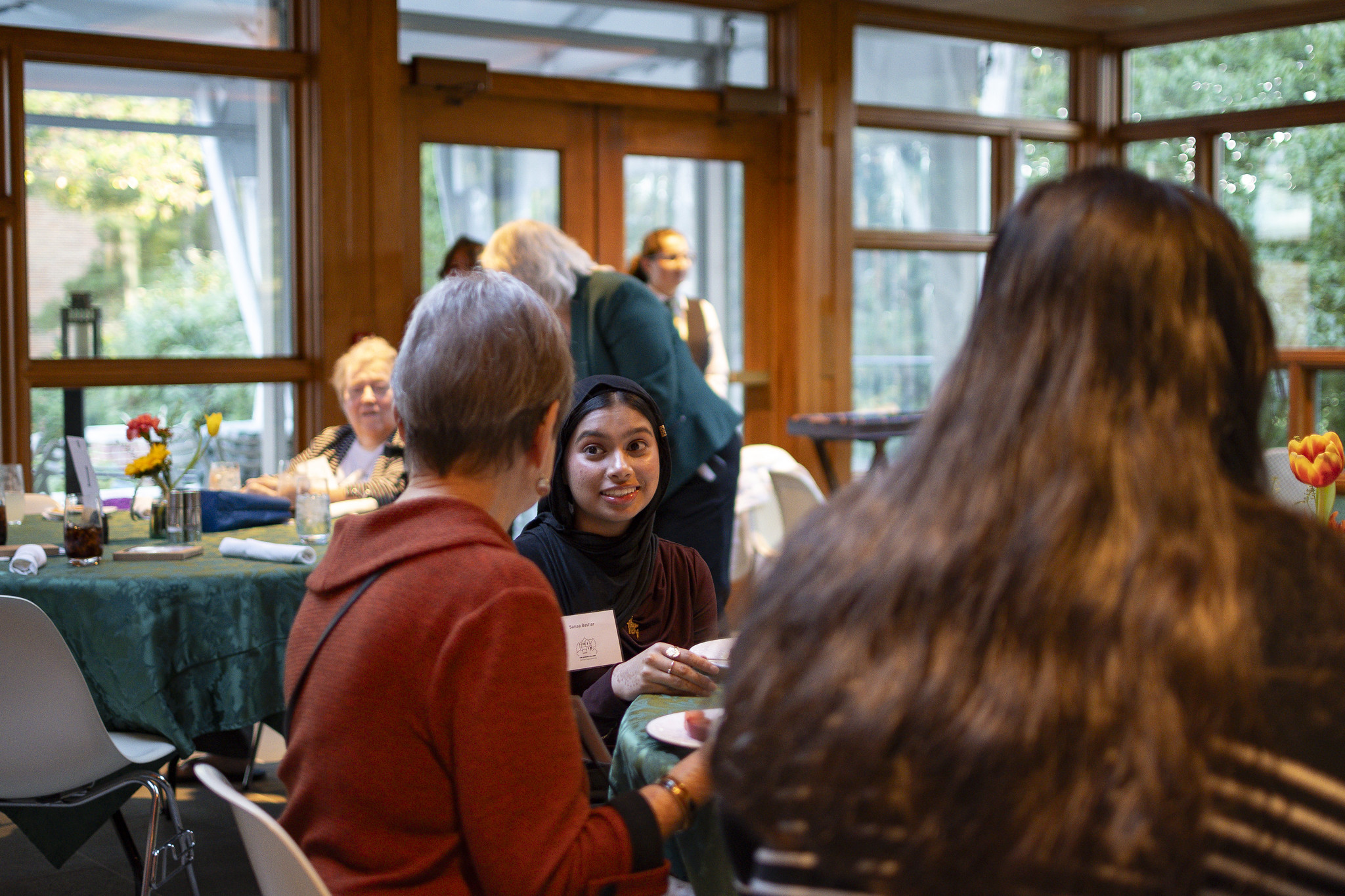
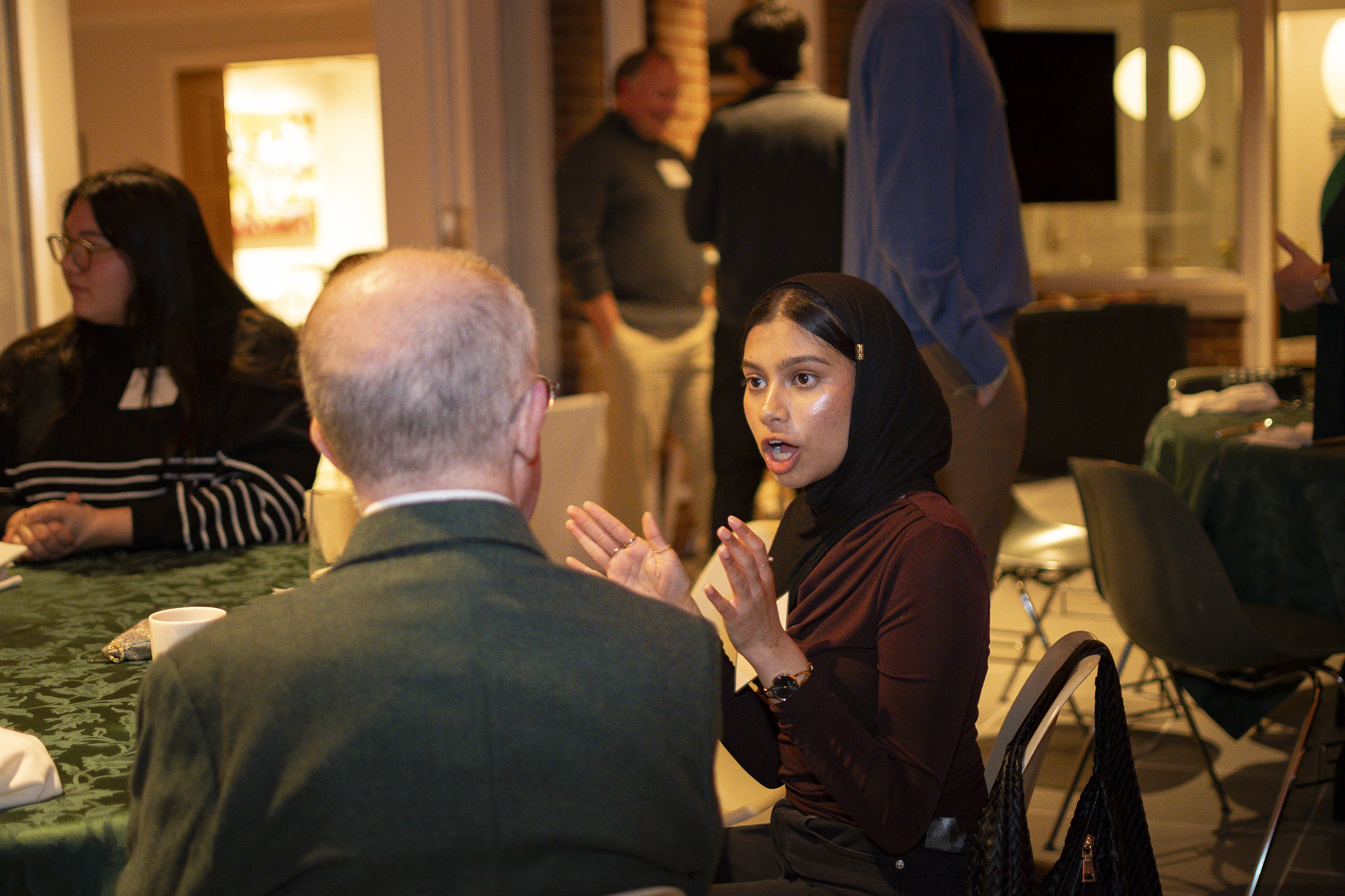
By Chiara Palomera Perez
“After my mom told me this story, I realized, I really want to be able to do something.”
After traveling to Bangladesh and West Bengal 14 years ago, Honors College student Sanaa Bashar described having an eye-opening experience to the levels of poverty, inequities, and inequalities that persist in such a densely populated country.
Discovering a calling through family roots
Bashar is a third-year Honors student majoring in global and international studies through the College of Social Science with a concentration in global health, as well as politics, rights, and cultures through James Madison College with a minor in Indian and South Asian studies. She is also president of Bengali Student Association at MSU.
Bashar’s parents are both from South Asia, her dad from Bangladesh and her mom from West Bengal. Growing up, Bashar heard stories about what life in her grandmother’s village was like.
“Because there was no public restroom, women and adolescent girls, when the sun went down and it was nighttime, that’s when they would have to go outside of their homes to use the restroom, because it’s darker so they have more privacy compared to during the day,” Bashar said.
“These are very unsafe conditions, women going out in the dark at night just to relieve themselves and use the bathroom, because there were no formal sanitation facilities for public use,” Bashar said.
When visiting 14 years ago, Bashar saw these struggles for herself.
“I was watching people washing their clothes in muddy water and I saw this girl, she had a shoebox as her dollhouse because [her family] didn’t really have much,” Bashar said.
Building a vision through undergraduate research
Before coming to Michigan State, Bashar had a project in mind revolving around healthcare in South Asia. She used opportunities through the Honors College to bring it to fruition.
During her first year at MSU, Bashar got a paid research position through the Honors Research Scholars program with Assistant Professor Saleh Ahmed in the Department of Sociology, learning about women in climate-vulnerable coastal Bangladesh. It was through Ahmed that Bashar connected with Saiha Marjia and received a video that started her whole project.
The video touched on the lack of fresh water in Bangladesh due to the increase in saltwater intrusion from climate change and rising sea levels. It explained the connection to increased reproductive health issues, menstrual struggles, and more for women and adolescent girls, leading them to take harsh contraceptives earlier on, causing uterine tumors.
Motivated by the video, Bashar began to plan a pilot project to make a deep tube well for communities in coastal Bangladesh and build a gender-segregated public latrine. The tube well would help alleviate the stress and health risks that women and adolescent girls faced from increased saltwater intrusion, while the latrine would create a safe space for women to use the bathroom.
Bashar started formally studying Bengali through the Foreign Language and Area Studies Fellowship and connected with a nonprofit in Bangladesh, BacharLorai Global, securing a Global Impact Fellowship.
Earning a Schoenl grant to make an impact
While searching for funding opportunities for her project through the Honors College, she came across the Schoenl Family Undergraduate Grant for Dire Needs Overseas.
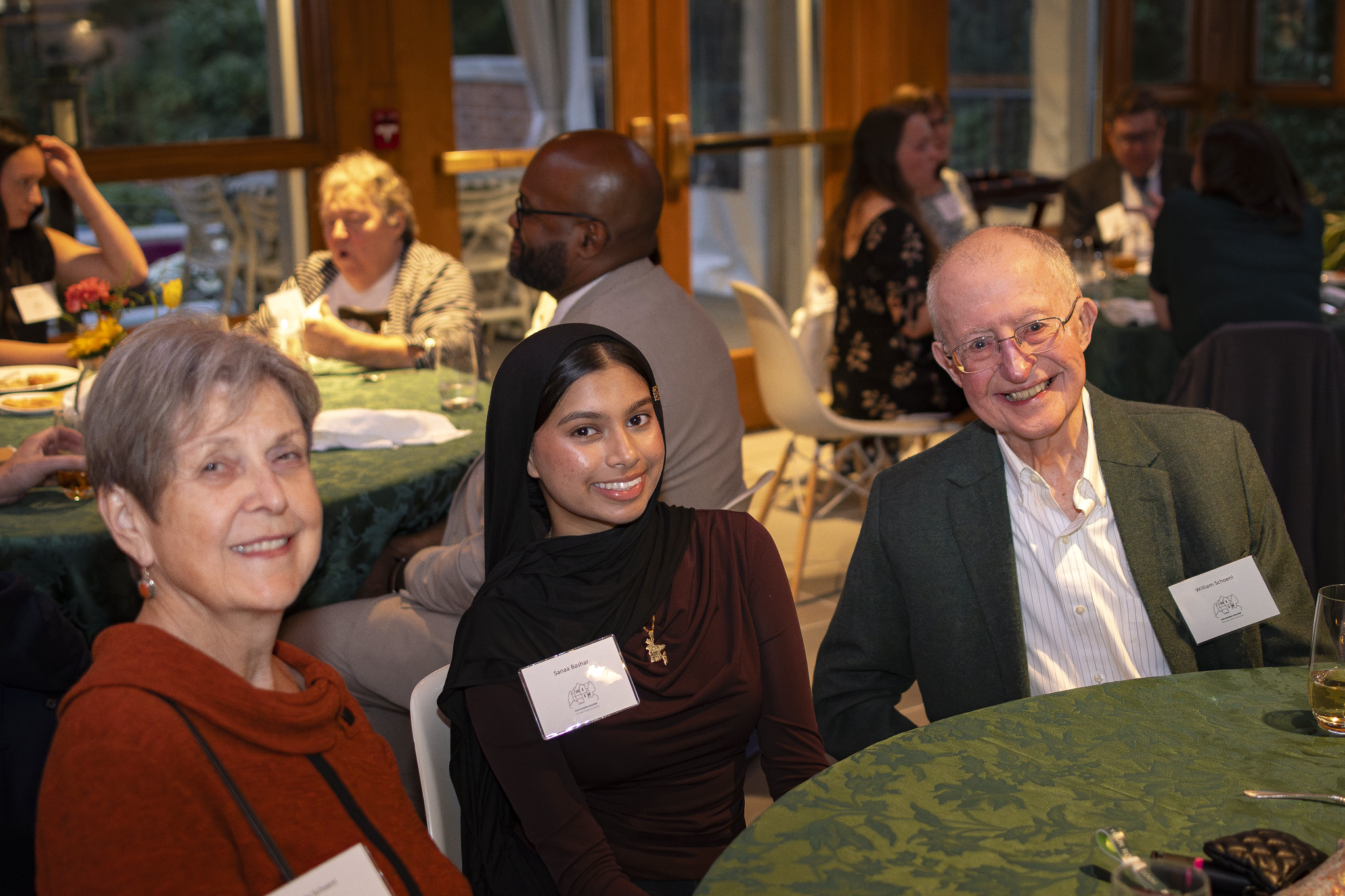
After applying for and ultimately earning the grant, BacharLorai Global connected Bashar to two locations with dire water and sanitation needs. The first was Datinakhali in the Munda tribe’s homeland, which she had context of through her research position with Ahmed, where a latrine was needed. The second was Gobindapur, a village near coastal Bangladesh in need of a tube well.
Expanding water and sanitation access
Thanks to Bashar’s hard work, grant funding, and nonprofit connections, the tube well and latrine are built in these communities and making an impact. Bashar’s original grant proposal anticipated reaching approximately 34 families, while the completed facilities serve a total of 117 households, or nearly 490 people.
The 680-foot-deep tube well provides year-round access to salinity-free drinking water, reducing the community’s reliance on unsafe and distant freshwater sources and helping protect residents from the health risks associated with prolonged exposure to saline water.
The latrine was built on a raised plinth to remain usable during flooding from cyclone season. Located directly beside a local school for Indigenous children, it also provides students with access to safe, private, and accessible sanitation.
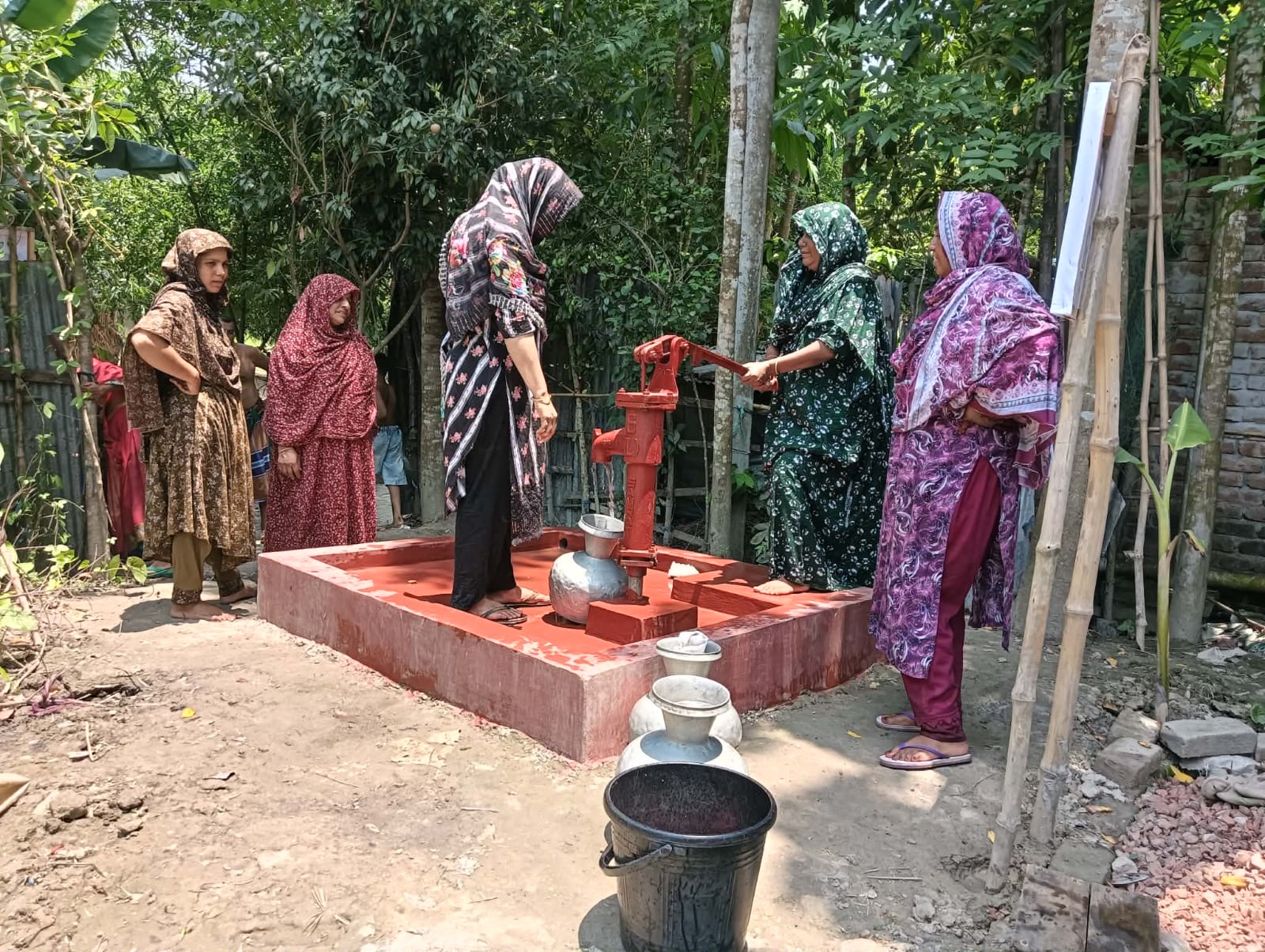 Completed tube well in Gobindapu
 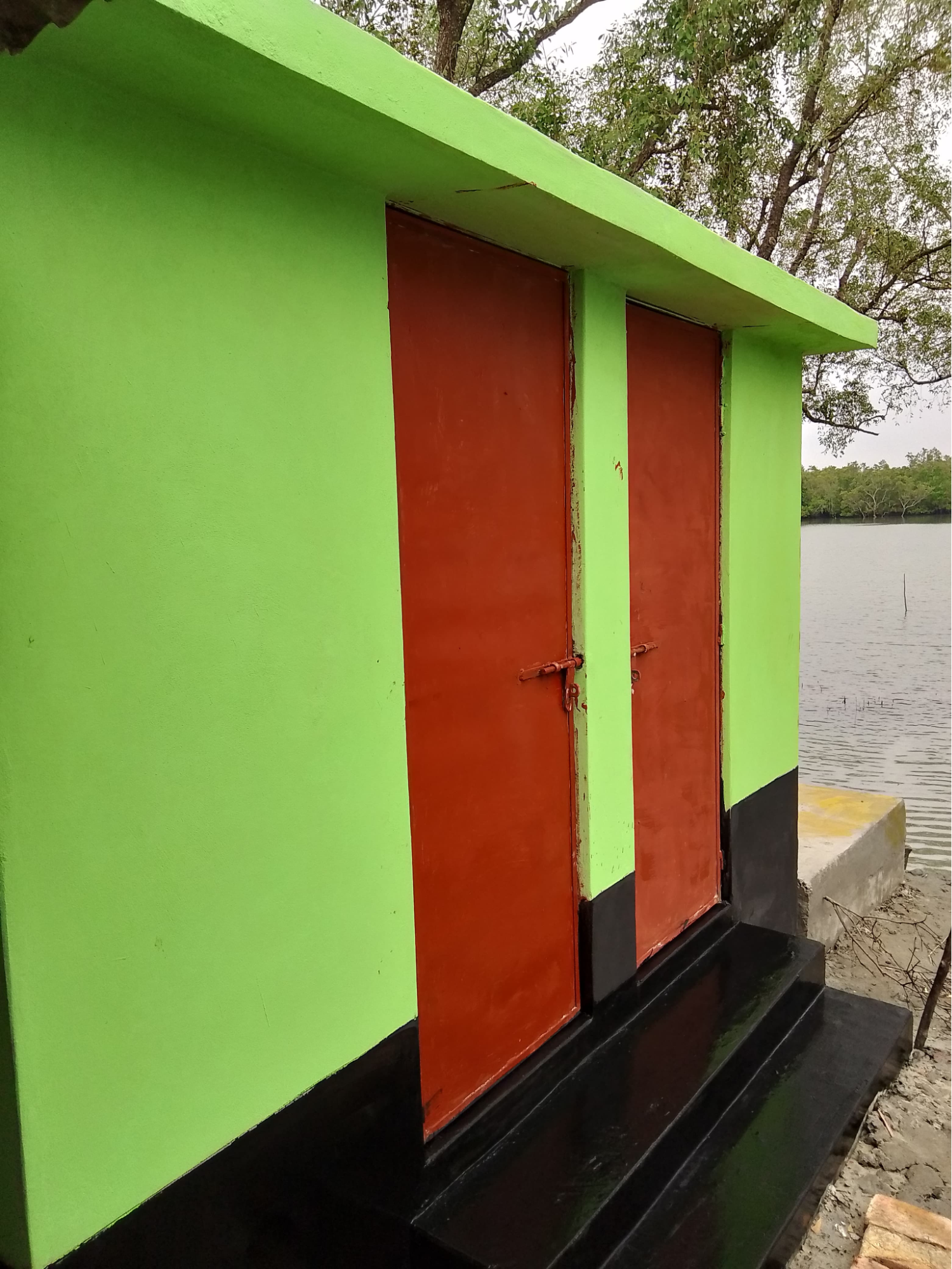 Completed latrine in Datinakhali
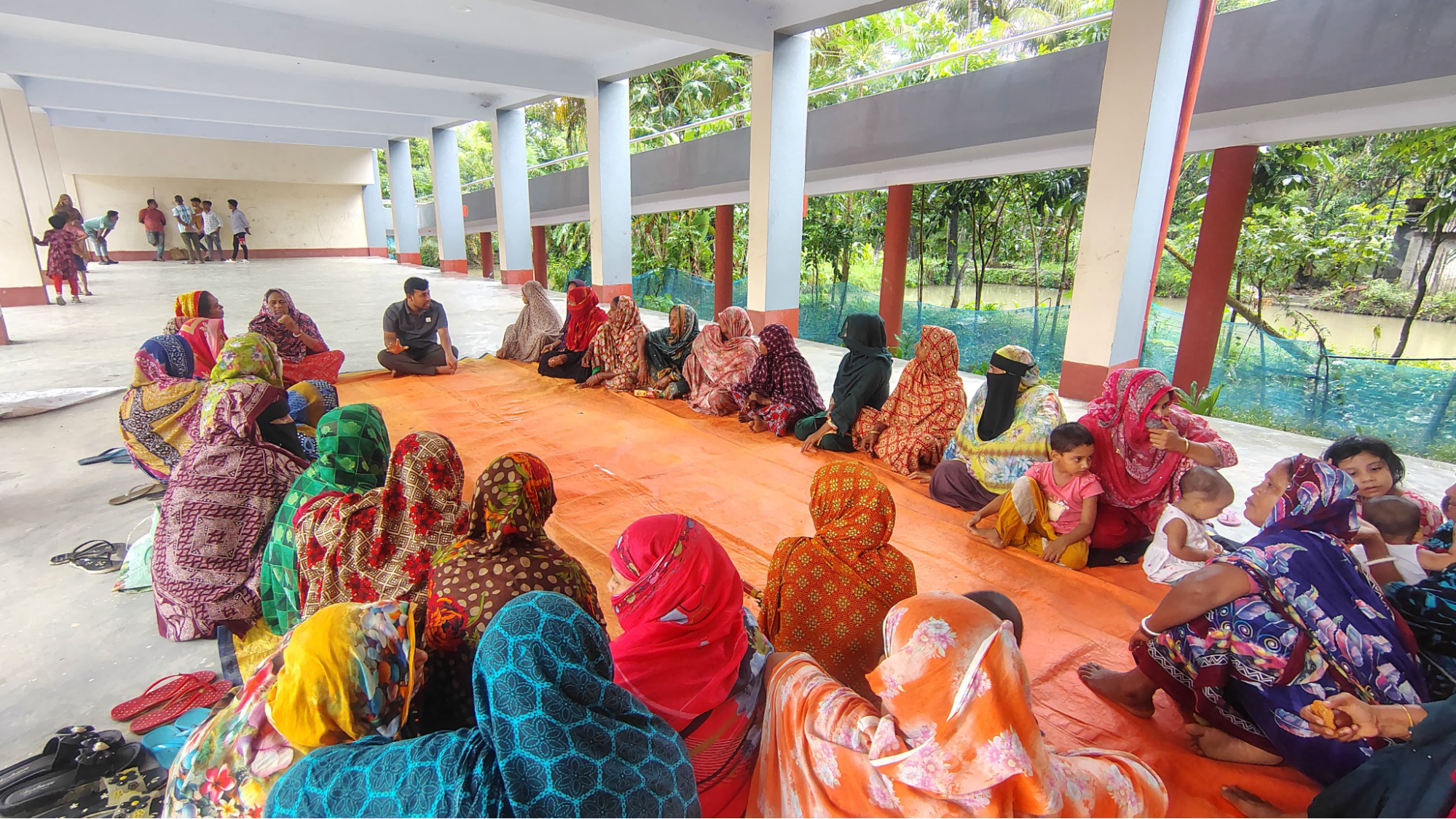
 For Bashar, ensuring the project could be sustained beyond its construction was just as important as building the facilities themselves. Infrastructure use and maintenance training was provided to both communities. In July, more than 60 residents of Gobindapur gathered for a courtyard meeting on safe water use and maintenance, agreeing to look after the tube well collectively. A similar session will be held at Datinakhali once the weather allows the shallow tube well serving the latrine to be finished.
“My hope is that these two facilities are able to be used for a long time to come,” Bashar said.
The power of an Honors opportunity
Bashar explains that without her connection to Ahmed through the Honors College, a project like this would not have been possible.
“I think MSU – and the Honors College specifically – is why this was even able to come together at all, because it provided me with the opportunity to fund a project like this,” Bashar said.
As someone of Bangladeshi heritage, Bashar said she felt a responsibility toward underserved communities in the region from an early age. She said she thanks the Schoenl family for providing her the opportunity to help people through this project.
“The more I came to understand the conditions they face, the more I wished to contribute in a manner that would address a genuine need,” Bashar said. “Thank you for making that possible, and for helping to provide women, children, and families with safer access to water and sanitation.”