
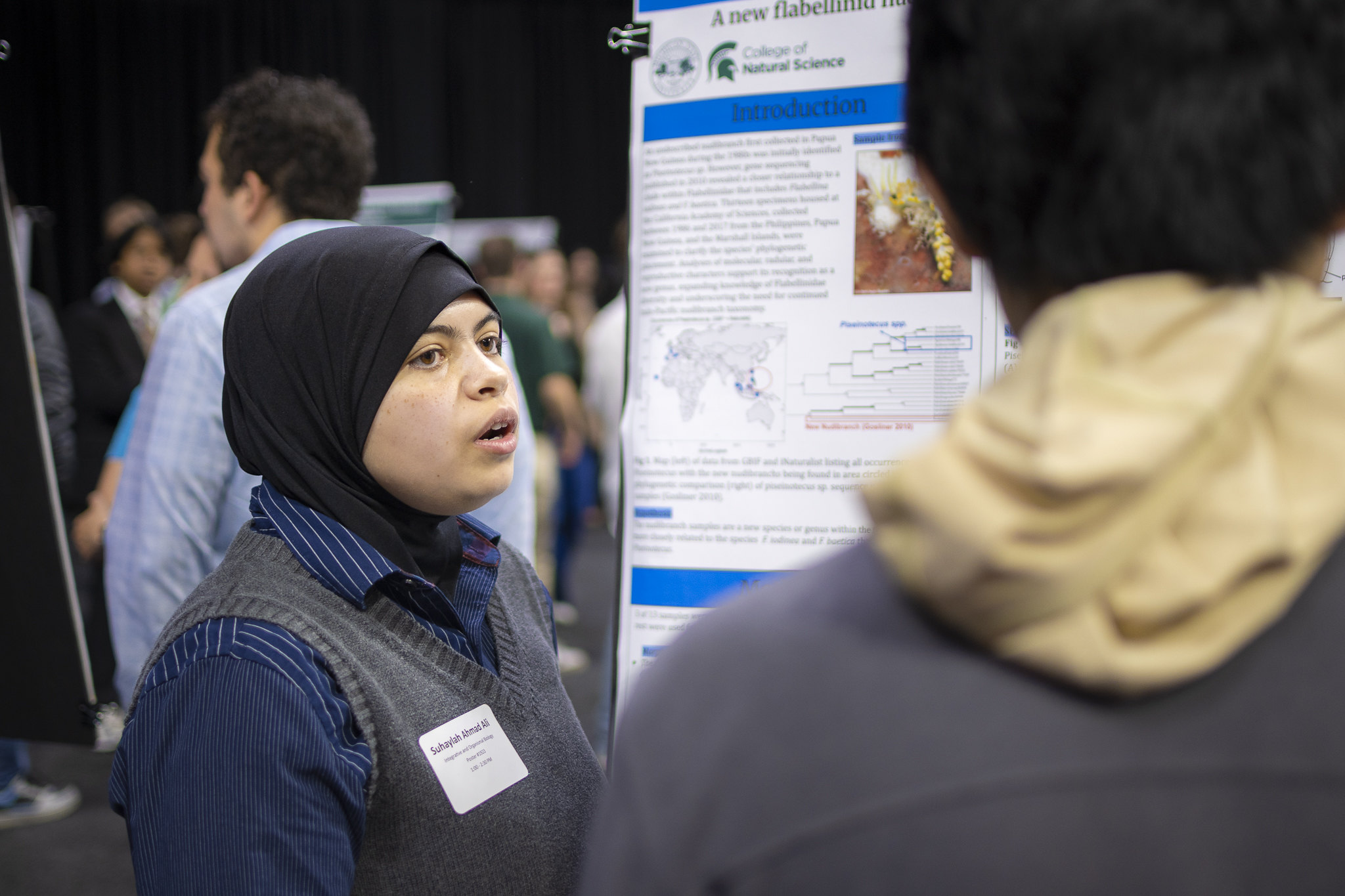
 Gillette Research Scholar Suhaylah Ahmad Ali
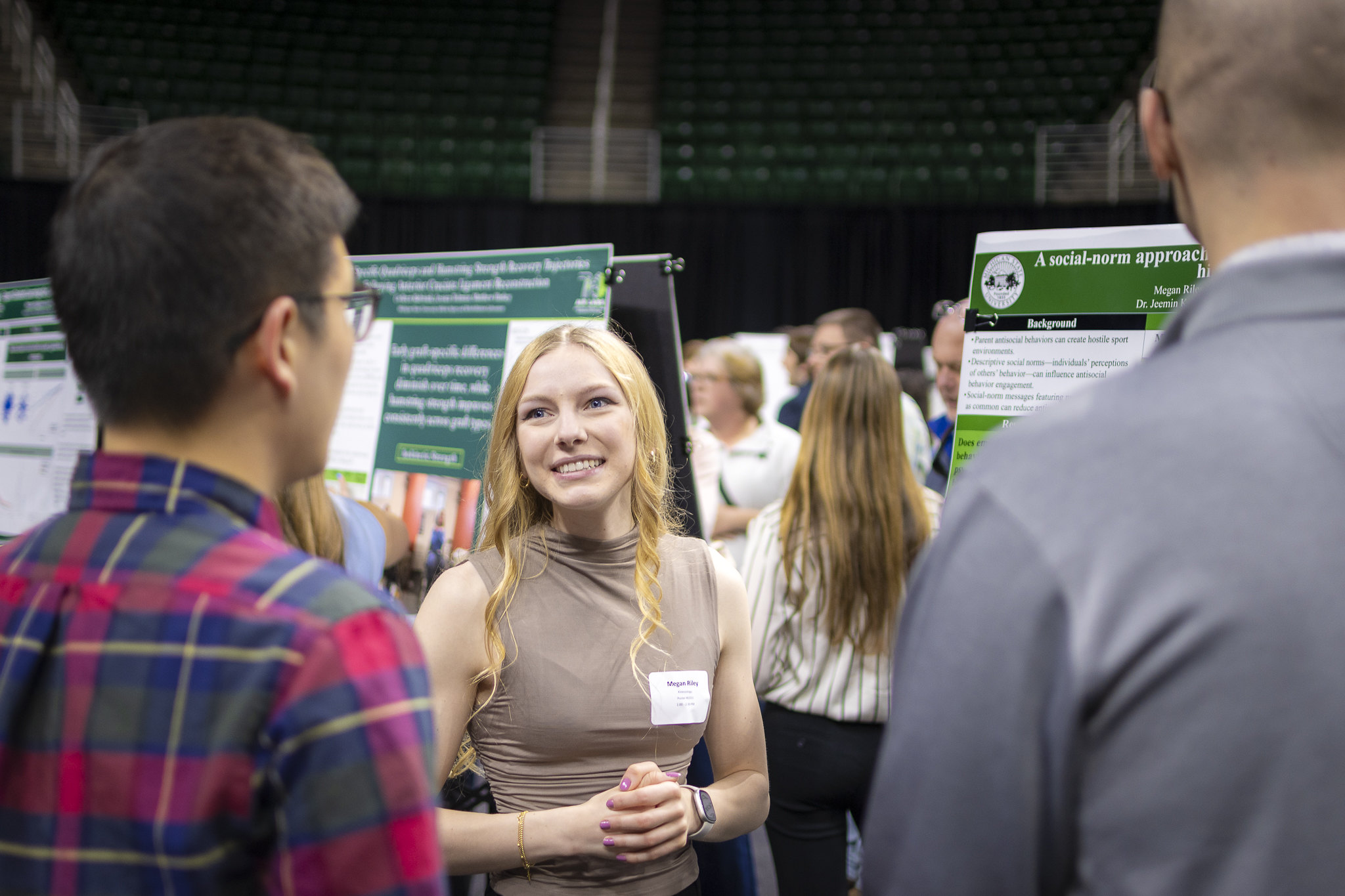 Wielenga Research Scholar Megan Riley
By Melanie Brender
For decades, undergraduate research has been a focal point of the Honors College. These experiences have fueled student success, growth, and discovery.
The Honors Research Scholars program emerged as a way for generous donors to support more undergraduate research positions, and in some cases, entire cohorts.
This has resulted in scientific discoveries and community impact from outer space to Michigan wetlands.
Making history through interstellar discovery
For Atsuhiro Yaginuma, the Honors Research Scholars program provided a chance to conduct breakthrough work in his field.
“In July 2025, the third known interstellar object, 3I/ATLAS, was discovered,” Yaginuma said. “My mentor, Professor Darryl Seligman, led the discovery paper, and I was fortunate to be included as a co-author.”
Interstellar objects are celestial bodies from outside our solar system. Only three have ever been detected passing through.
Yaginuma, who graduated in May with a degree in astrophysics from the College of Natural Science, was able to expand on the discovery of 3I/ATLAS with support from the Gillette Endowment for Financial Aid to Honors College Students.
“Through the Gillette Research Scholar Endowment, I was able to continue pursuing my passion for interstellar objects and further develop my research career,” Yaginuma said. He said this support through the Honors College also helped him travel nationally to present his work at conferences hosted by the University of Arizona, John Hopkins University, the University of Michigan, and the University of Wisconsin.
As an undergraduate, Yaginuma led an international project on “the feasibility of spacecraft flyby missions to 3I/ATLAS in collaboration with NASA scientists, mission principal investigators, and researchers across multiple institutions and countries.”
The work resulted in a first-author publication for Yaginuma in The Astrophysical Journal and a clear vision for his career path.
“I applied to Ph.D. programs with the goal of becoming a leading scientist in small-body and interstellar object research,” Yaginuma said. He is returning to MSU in the fall to pursue that goal and continue his work with Seligman as a graduate student.
Exploring the lasting impacts of temporary wetlands
When Devin Olep stepped into Professor Angela Burrow’s lab as an Honors Research Scholar, she gained a deeper understanding of a typically shallow body of water.
“The research that I took part in over the course of this past year will benefit the protection of vernal pools across the United States, and advocate for the abundance of species and organisms that live within them,” said Olep, who is majoring in environmental biology/zoology through Lyman Briggs College.
Vernal pools are seasonal wetlands that – while temporary – serve as important habitats for wildlife.
“Through remote camera traps, I have been able to quantify the many species within these ecosystems across southern Michigan, providing data on what species consider vernal pools their habitat and in what amounts,” Olep said.
“This allows scientists to convey the importance of these pools through mammal and avian usage, providing additional evidence to their importance within the environments,” she continued.
Olep said the experience she gained in “animal handling, data collection, project planning, and field work” helped her earn a position at the John Ball Zoo. It will also make her a well-rounded candidate as she applies to MSU’s College of Veterinary Medicine.
“I am incredibly grateful for the experiences and opportunities I have received as a student in the Maguire Research Scholar program,” Olep said.
 Maguire Research Scholar Devin Olep
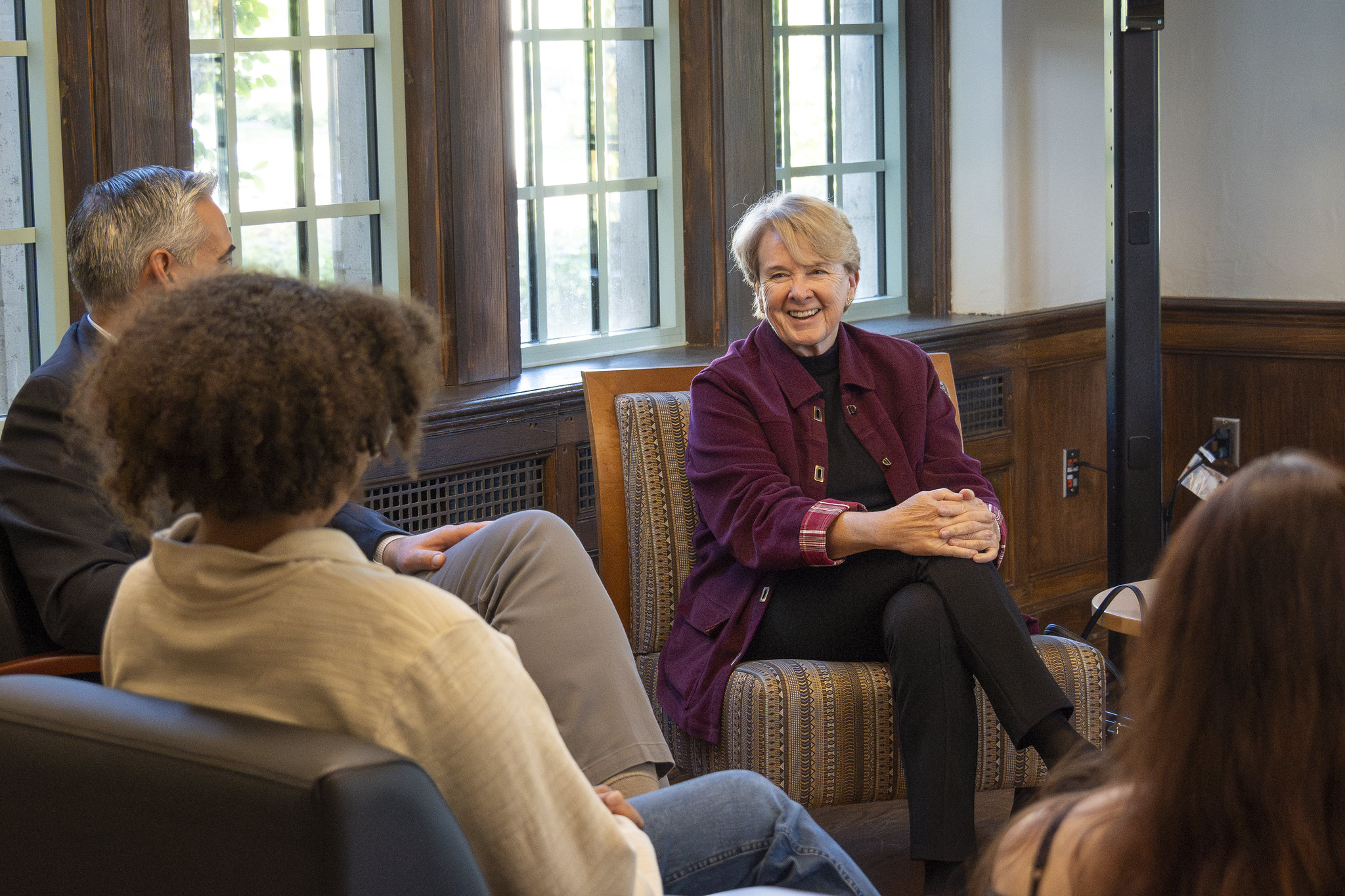 Cohort donor Joanne Maguire
Forging a new mindset through graduate-level research
For Honors Research Scholars like Parameswar Nair, the initiative can be a defining part of the college experience.
“Being part of the Wielenga Research Scholars program has been one of the highlights of my time at Michigan State,” Nair said.
Nair traveled from his home country of India for an Honors College Spartan education. That leap brought him toward research opportunities far beyond the typical undergraduate experience.
“This past year I have been working at the DeepTech Lab researching how audio augmentation techniques affect machine learning models for sound recognition,” Nair said, ‘and what I did not expect was that it would lead to co-authoring a formal research paper with a Ph.D. student.”
“Very few undergraduates get that opportunity, and it has genuinely changed how I think about my own capabilities and what I can contribute to the field,” Nair said.
His said his work in the DeepTech Lab under Professor Josh Siegel fundamentally shifted how he thinks about his career path as a computer science major through the College of Engineering.
“I used to see research as a separate academic path, but working in a lab taught me that framing problems clearly, knowing what to measure, and communicating findings to different audiences are skills that transfer everywhere,” Nair said.
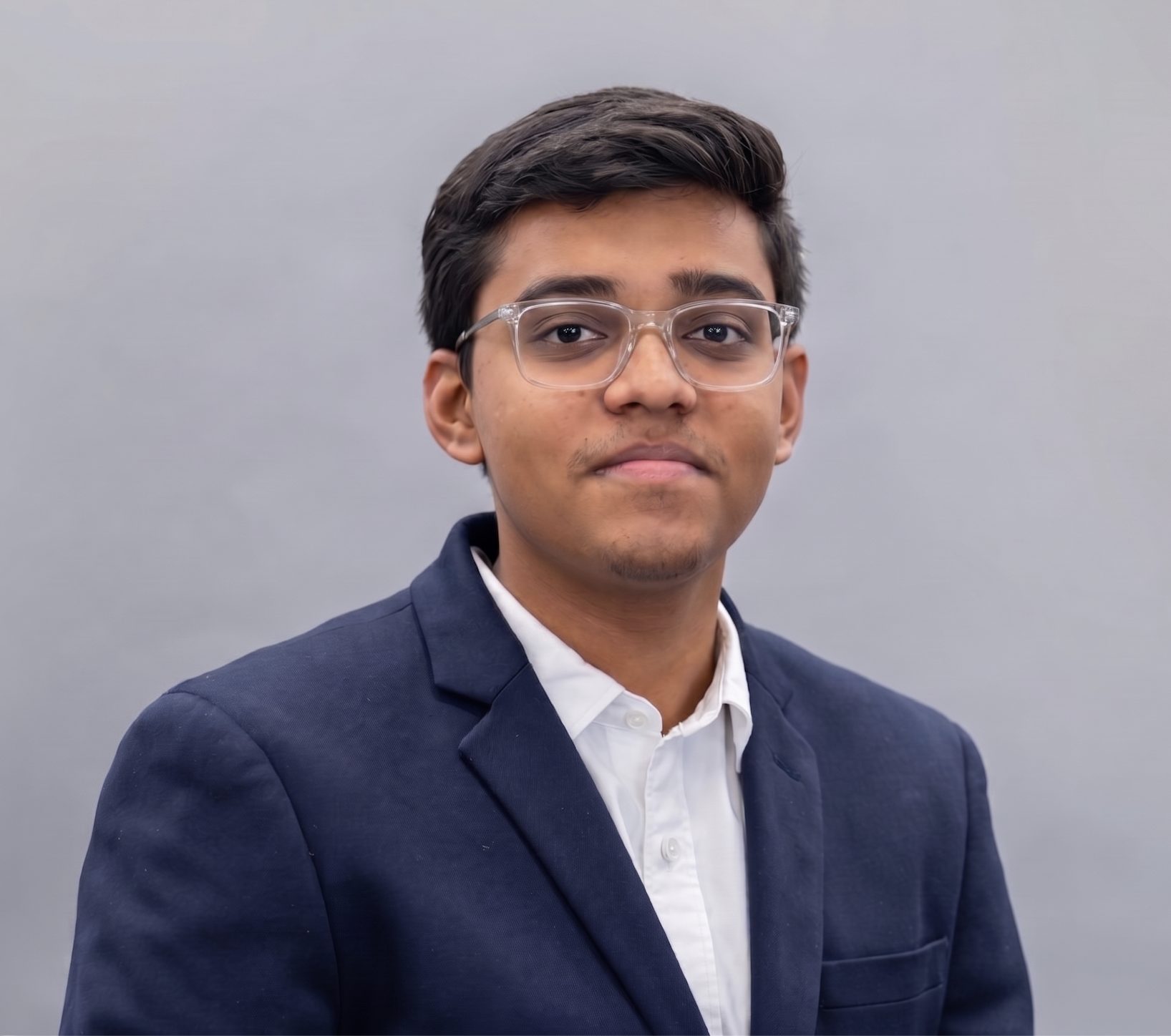 Wielenga Research Scholar Parameswar Nair
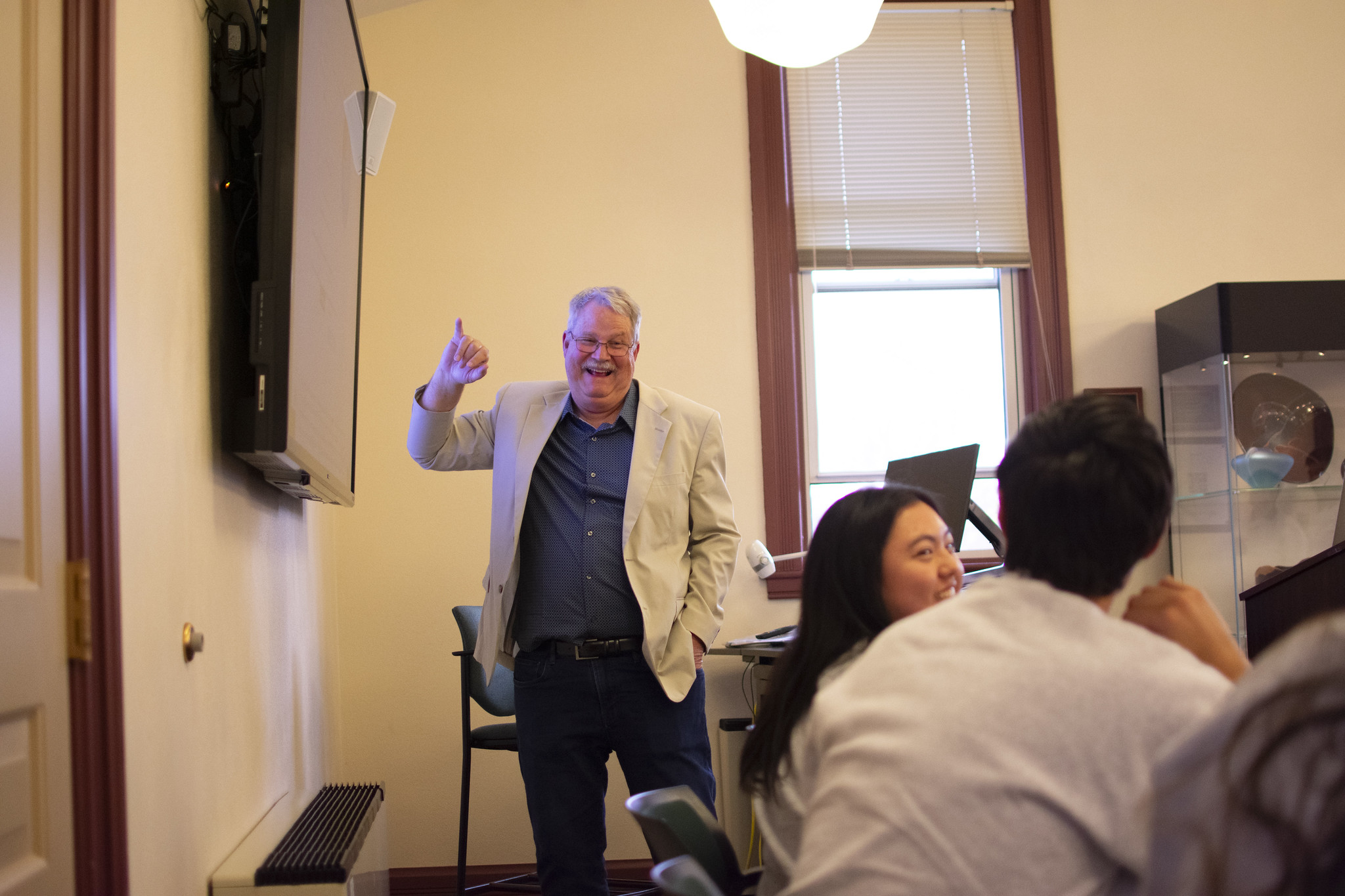 Cohort donor Tom Wielenga
Interested in making an immediate impact on the Honors Research Scholars program? Contact Ryan Robinet or visit the giving portal.