ASP Summer ACE Program
The Academic Scholars Program (ASP) at Michigan State University launched its inaugural summer bridge program in 2022.
The Summer ACE Program – Accelerating Connections & Excellence is designed to welcome incoming Academic Scholars to MSU, support their academic and social transition to the university, and further introduce them to resources and opportunities available on and off campus.
Through the program, 35 incoming Scholars have the opportunity to:
- Start building their Spartan network within and beyond the classroom
- Begin working toward their ASP requirements by completing their first-year experience course and 1 of 2 Honors experiences
- Take advantage of reduced tuition through the Spartan Early Start Program
- Live on campus for one week in July and begin settling into their new community
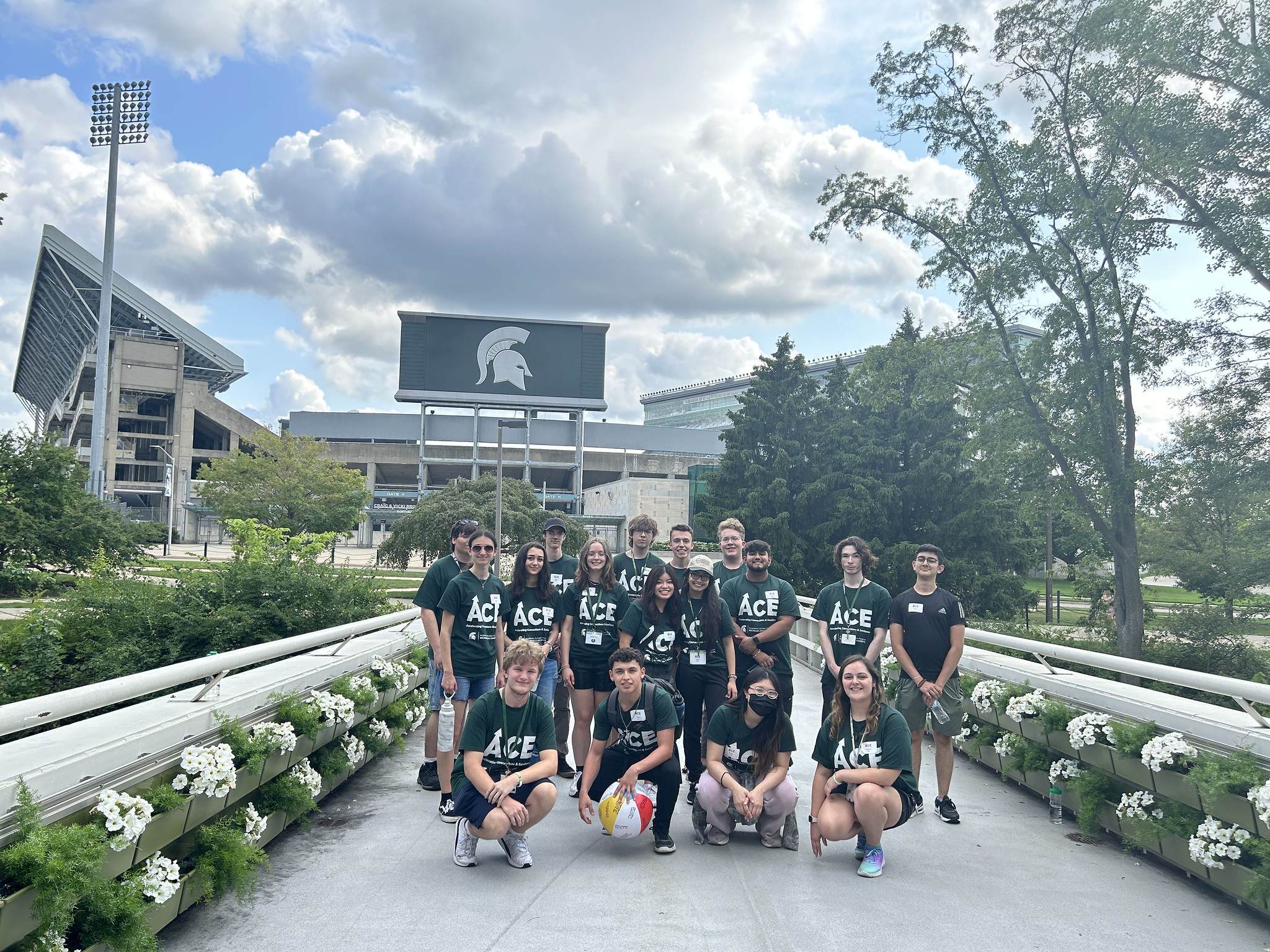
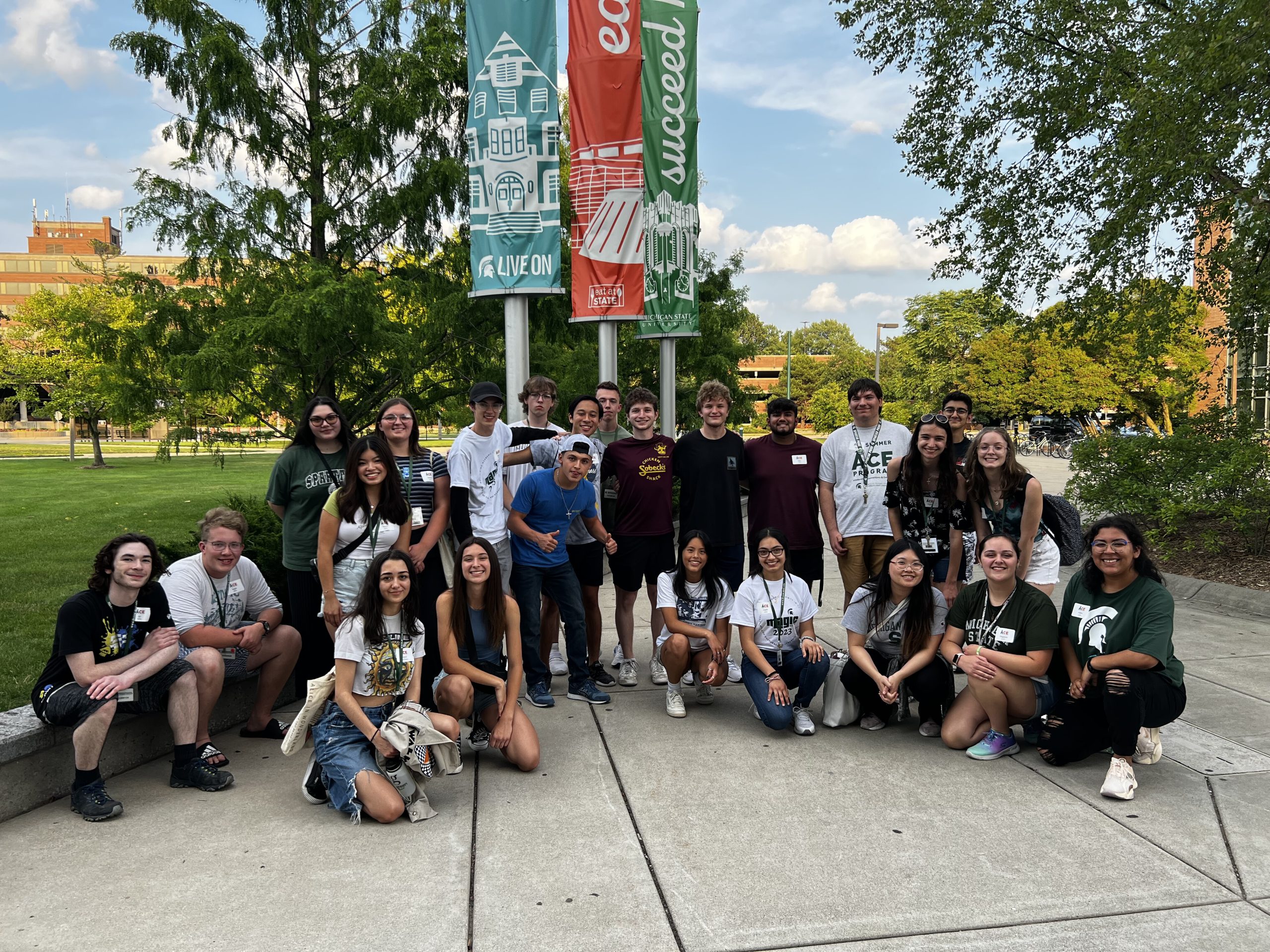
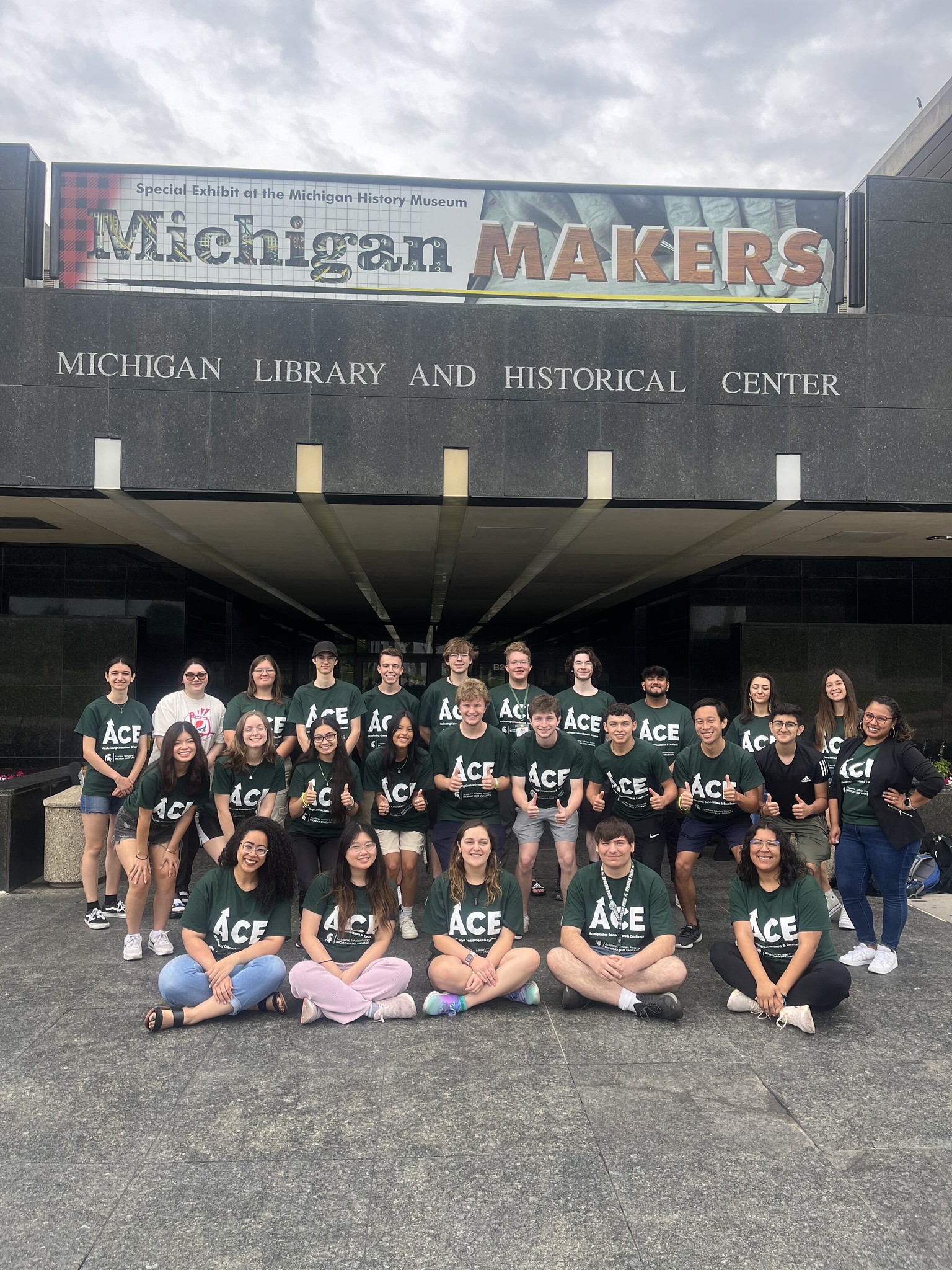
The 2027 Summer ACE Program is a hybrid experience hosted July 7 – August 20, 2027 with one week on campus required July 11-18.
Program Information
ACE participants are expected to engage in all parts of the program from July 7 – August 20 as outlined below.
- July 7 – August 20 – hybrid synchronous course (90-120 minutes weekly) and weekly programming led by Undergraduate Learning Assistants (90-120 minutes)
- July 7-10 – virtual synchronous course sessions + weekly discussion sessions
- July 11-15 – no course sessions
- July 16-18 – in-person course sessions
- July 19 – August 20 – virtual synchronous course sessions + weekly discussion sessions
- July 11-18 – on-campus experience with ASP and OMEA**
**Participants will live on campus near MAGIC and ACE program activities; this is likely not the same as your assigned residence hall for the 2027-2028 academic year.
The 2027 Summer ACE Program is open to first-year members of the Academic Scholars Program whose first semester at MSU is Summer/Fall 2027. Applications will open early June and are due by 11:59 p.m. ET on Friday, June 18.
- Stay tuned for the 2027 application!
NOTES
All ACE participants are expected to participate in week one of the 2027 Maximizing Academic Growth in College (MAGIC) Program.
There is a $100 participation fee for the 2027 MAGIC Program. If the participation fee poses a hardship, please email ocat@msu.edu to learn about the waiver process.
Program Costs
- $450 – Tuition for UGS 201H (discounted through the Spartan Early Start Program)
- $0 – Textbooks (all materials will be accessible via D2L)
- $160 – Participation fees (meals and lodging)
- $100 paid as part of MAGIC application
- $60 applied toward Fall semester bill for ACE participation
Tuition expenses and the ACE participation fee will be charged on the Fall semester bill. Upon completion of the MAGIC application, applicants will be directed to the online payment site to submit the MAGIC participation fee.
Scholarships are limited. All applicants will be considered for scholarship as funds allow. Please email ecrews@msu.edu if the cost presents a hardship.
*Please note 2027 course information is pending.*
2026 Course Information
UGS 201-730H: Paved Over: Highways, Urban Renewal, and the American City
Summer Session 2 – June 29-August 14
Dynamic (synchronous online course with weekly evening ULA meetings plus in-person week July 12-19)
Instructor: Dr. Deyanira Nevarez Martinez
Requirement Fulfillment
UGS 201H is eligible to count toward:
- ASP first-year experience requirement
- 1 Honors experience
- 1 Integrative Studies requirement (ISS 200-level OR IAH 211+)
Course Meeting Times
- Weekly online sessions with an Honors faculty member (Tuesdays 2:30-4:00 p.m. ET)
- Weekly discussion sessions with Undergraduate Learning Assistants and MSU staff (Thursdays 7:00-8:30 p.m. ET)
All class sessions as posted are required to participate in ACE with limited exception.
Course Description
Why do highways cut through some neighborhoods and not others?
Across the United States, urban renewal and freeway construction dramatically reshaped cities during the twentieth century. While often framed as “progress,” these projects disproportionately displaced Black, Latino, immigrant, and low-income communities. Entire neighborhoods were demolished in the name of modernization, economic growth, and automobile mobility.
This course examines the relationship between planning, race, infrastructure, and power through a national exploration of urban renewal and a focused case study of the construction of Interstate 496 in Lansing, Michigan. Students will investigate how policy decisions affect communities, analyze historical narratives, and consider how cities can repair harms created through past planning decisions.
Using readings, documentaries, podcasts, maps, archival materials, oral histories, and community-based storytelling, students will learn how infrastructure shapes everyday life and how residents organize to preserve community and advocate for justice.
Technology Requirements
Computer with reliable access to internet
MSU Net ID to gain access to MSU Libraries electronic databases
2027 guest information is pending.
2026 program sponsored by: