
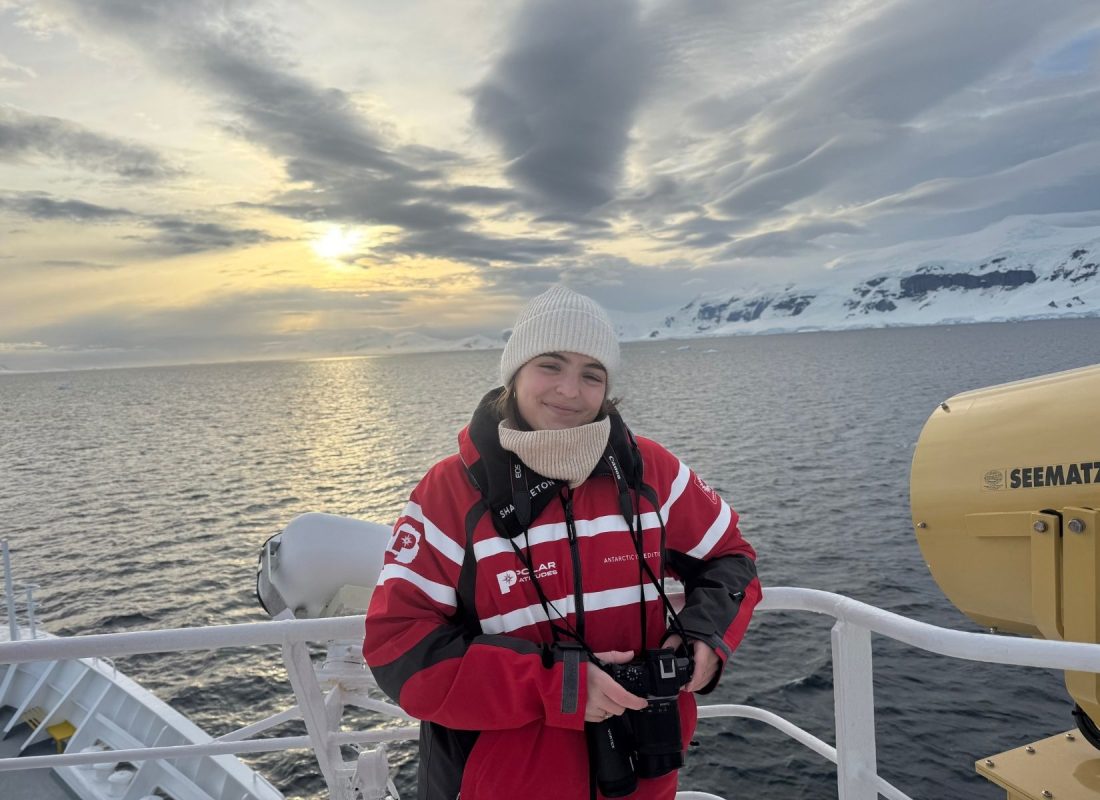
By Sloane Barlow
Michigan State is a leading university in education abroad, with over 350 programs across all seven continents. About 40% of Honors students participate in a study abroad program during their time at MSU.
Fourth-year Honors College student Julia Preservati has studied abroad three times as a Spartan. She graduates this spring with dual degrees – one in zoology, another in environmental studies and sustainability – as well as a minor in leadership and integrative learning through the Bailey Scholars Program.
The world as a classroom
Preservati cites her study abroad opportunities as some of the most impactful parts of her MSU education.
“I never really left the study abroad office,” she said.
Staring with Costa Rica in 2022, Preservati’s trip focused on sustainability and forming community in spaces centered around nature. The following year, she lived and worked on a conservation reserve in South Africa with rhinos, elephants, hippos, zebras, and lions.
“The one that was most life-changing for me was when I went to Antarctica and Argentina, looking at polar ecosystems changing in the Anthropocene,” Preservati said.
She spent her fall 2024 semester taking an additional course to prepare for this trip, studying how human impact has caused polar environments to shift and how humans can prepare for those changing climates.
“We were learning about the ocean currents, learning about the species, learning about the wind, learning about the geology,” Preservati said. “So when we got there, we were able to understand what was happening around us.”
With four days in Argentina, eight days on a boat around Antarctica, and four days back in Argentina, Preservati spent her day-to-day identifying species across the polar region – from humpback whales to Weddell seals to gentoo penguins – and documenting them in her wildlife journal.
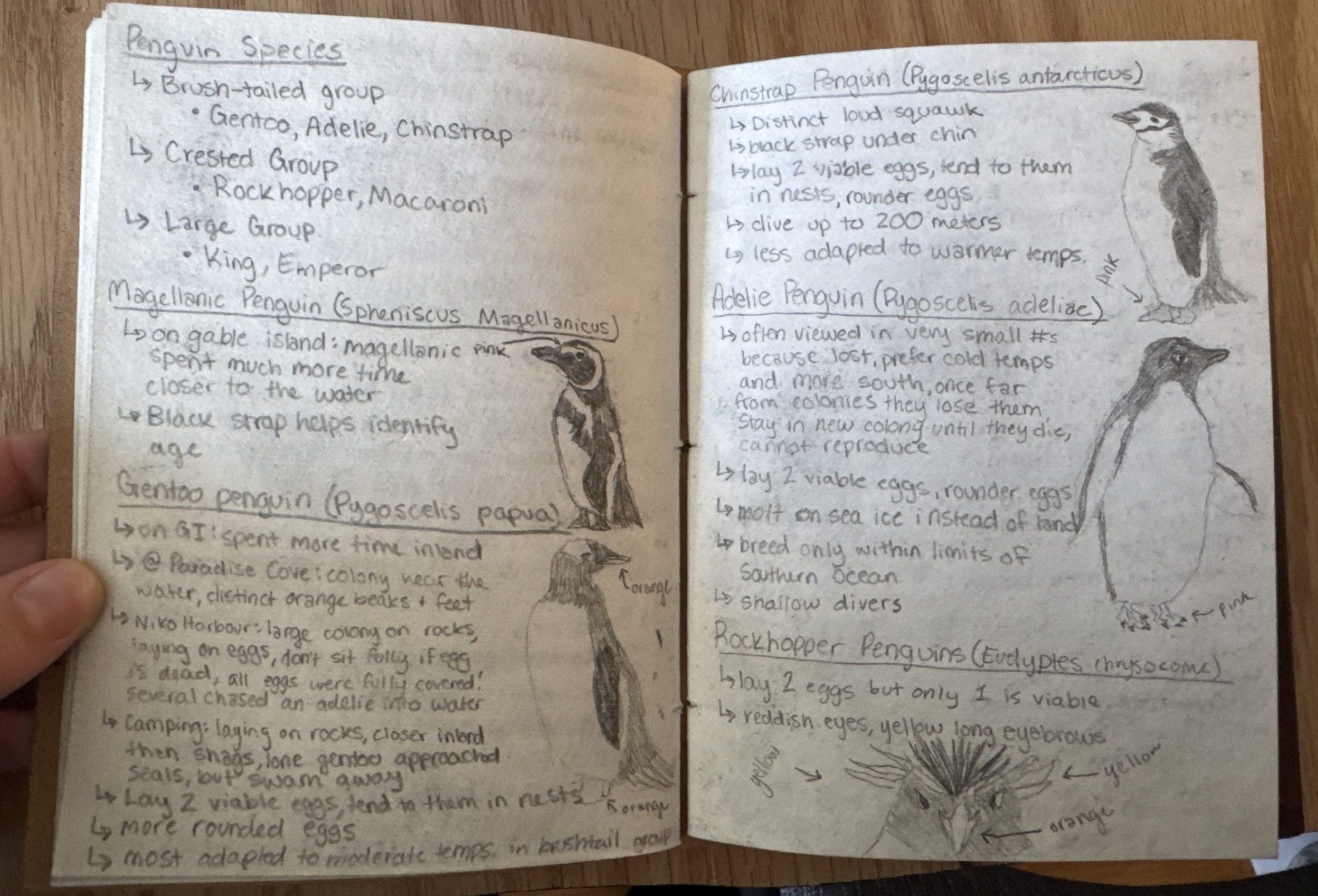
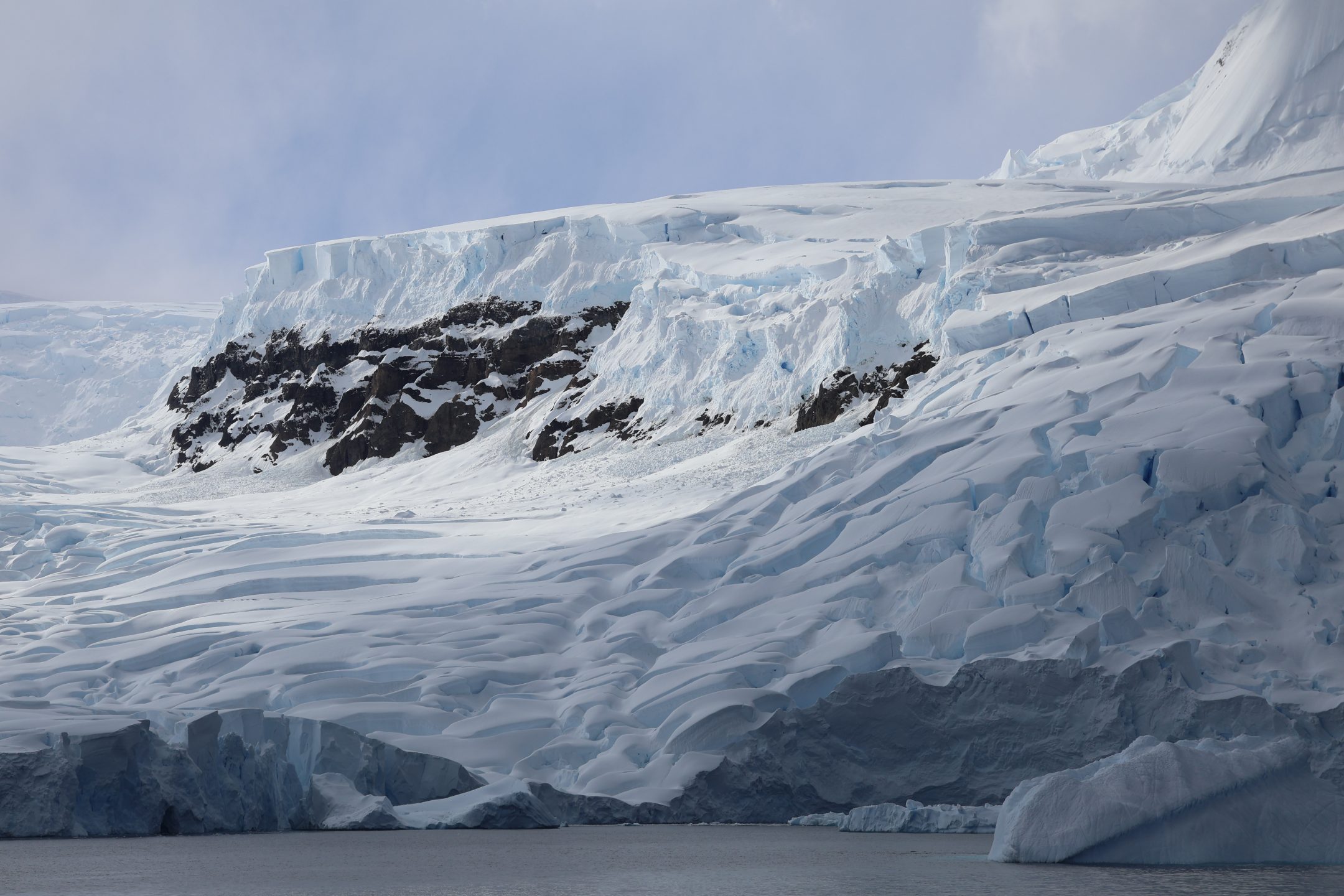
“I remember the moment I saw my first iceberg,” she continued. “It was just a moment I will never forget, it made you feel so small in the best way.”
A future in polar research
Through her time abroad, Preservati said she felt a life-changing call to become a polar ecologist, despite its current challenges.
“The political climate of the country doesn’t provide many resources for environmental science right now,” she said. “So it has been very difficult to find higher education opportunities in this field.”
But through her application journey as a Marshall Scholarship nominee with the Distinguished Student Awards Office, housed within the Honors College, Preservati has connected with a professor in the United Kingdom with a potential opportunity working with polar seals in the Arctic and Antarctic.
“[Marshall] didn’t go all the way through, how I hoped, but it gave me so much clarity on what I wanted to do following postgrad,” Preservati said. “I can confidently say I have a plan now.”
Preservati hopes to spend a year working in the field before attending a master’s program, and eventually a doctoral program, rooted in researching the severe impacts of avian flu on Arctic regions.
 “I really want to look at the impact, not necessarily even on birds, but on seals. Seals are also getting very exposed and having large die-offs, and there’s been some studying, but none in the polar regions,” Preservati said.
While she was on her trip, it was unlike any of the years before with the safety precautions taken for the avian flu.
“While we were on Antarctica, no part of us could touch the continent besides the bottom of our shoes,” Preservati said. “The primary concern right now in Antarctica is just how deadly bird flu is and how many species it’s impacting.”
“That was really sad to see, but it was also very fitting for what we were studying,” she continued. “It’s looking at things affecting these vulnerable environments, what human impacts we mitigate, what can we help to do to stop the spread, and how can we fight and advocate for these areas.”
Bringing impact back home
Back on campus, Preservati cites her Honors experiences as allowing her to engage with her course material at a deeper level, such as an Honors project exploring perception of sustainability in different regions of the world.
She said she was able to conduct Zoom meetings with people from all of her study abroad experiences – from community members in Costa Rica to a ranger in South Africa – talking about what sustainability means to them and where they live.
Preservati has also gained valuable experience as an undergraduate researcher for two labs.
She has worked with Assistant Professor Phillip Warsaw for two years as a professorial assistant, previously reporting on the United States Department of Agriculture local food purchasing agreement, and now developing a project with the Center for Regional Food Systems.
Preservati also works in Associate Professor Jeno Rivera’s lab, where she is making a database of agricultural and environmental education programs across Michigan with a focus on accessibility to migrant farmers.
“I just loved the people I was working with and things I was working on that I just couldn’t find myself saying no to these opportunities,” she said.
Preservati was even able to bring back her own research from Antarctica and Argentina. She wrote a 14-page paper dissecting the Antarctic Treaty, specifically in relation to the possible threat of mining on the continent – an action that Preservati notes would exploit natural resources at the expense of severely damaging the polar ecosystem with very little gain.
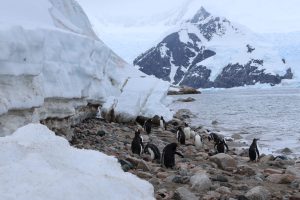
“It’s open to all majors and it was a life-changing experience for everyone,” Preservati said, referring to the Antarctic Ecosystem in a Changing World study abroad program.
“We would be sitting on this boat talking about, how do we protect this place? We had difficult discussions about how we’re not necessarily helping this environment by traveling to it,” she said. “How do we protect Antarctica in a way where we also don’t make it so exclusive and so privatized that it’s not accessible to people who can really be inspired from it?”
Preservati’s Honors journey at one of the top universities in the nation for education abroad has prepared her for making a lasting global impact – through in-field preservation and restoration of the world’s environments – to answer these echoing questions.